Sumo Show or Morning Practice in Osaka: Which Should You Book?
Osaka gives visitors two genuinely different ways to see sumo, and most guides blur them together. A tourist sumo show is staged entertainment, while a sumo morning practice in Osaka is unscripted training at a working stable performed by retired professionals for a paying audience, with an English MC, a ring challenge and photos. A stable morning practice is the opposite: a small, silent group watching real professional wrestlers run their actual asageiko training, with no performance built around you at all. If you're weighing sumo show tickets in Osaka against the practice tour, the honest answer depends less on budget and more on what you actually want to watch. This post lays out both, the real price gap between them, and where the March tournament fits in if your dates happen to line up.
Quick answer
Book a sumo show if you want an entertaining, narrated performance with a ring challenge and photos, from $60 to $91. Book the stable morning practice if you want to watch real professional wrestlers train, silently, for $113. If your trip falls in March, the Grand Sumo Tournament is a third, entirely different option.
Key takeaways
- Tourist shows run $60 to $91 per person and are staged entertainment by retired professionals with an English MC
- The stable morning practice tour is $113, 2 hours, small group, and shows genuine asageiko training by working professionals
- Shows are interactive, you can be picked for the ring challenge; practice is silent observation only, no participation
- The most popular show rates 4.8 stars from 1,049 reviews, giving a reliable sense of what most first-time visitors get
- Families and first-timers tend to prefer the show; sumo purists and repeat visitors tend to prefer the practice tour
- In March, the real tournament becomes a third option layered on top of both, covered separately
Why This Comparison Actually Matters
Most visitors researching sumo in Osaka assume the practice tour is simply the pricier, more serious upgrade from a show, and that assumption leads people to overpay for an experience that isn't actually a better fit for them. The two products aren't tiers of the same thing, they're built around opposite ideas of what makes sumo worth watching. A show exists to be understood by someone who's never seen sumo before: everything is explained, translated and paced for an audience.
A stable's morning practice exists for the wrestlers, not for you, and the fact that a small number of visitors are quietly allowed to sit and watch doesn't change that it would happen exactly the same way with an empty room. Neither format is trying to be the other, and judging one by the other's standard is where most trip-planning regret in this category comes from.
Show vs Morning Practice: The Real Difference
Tourist sumo shows ($60-91)
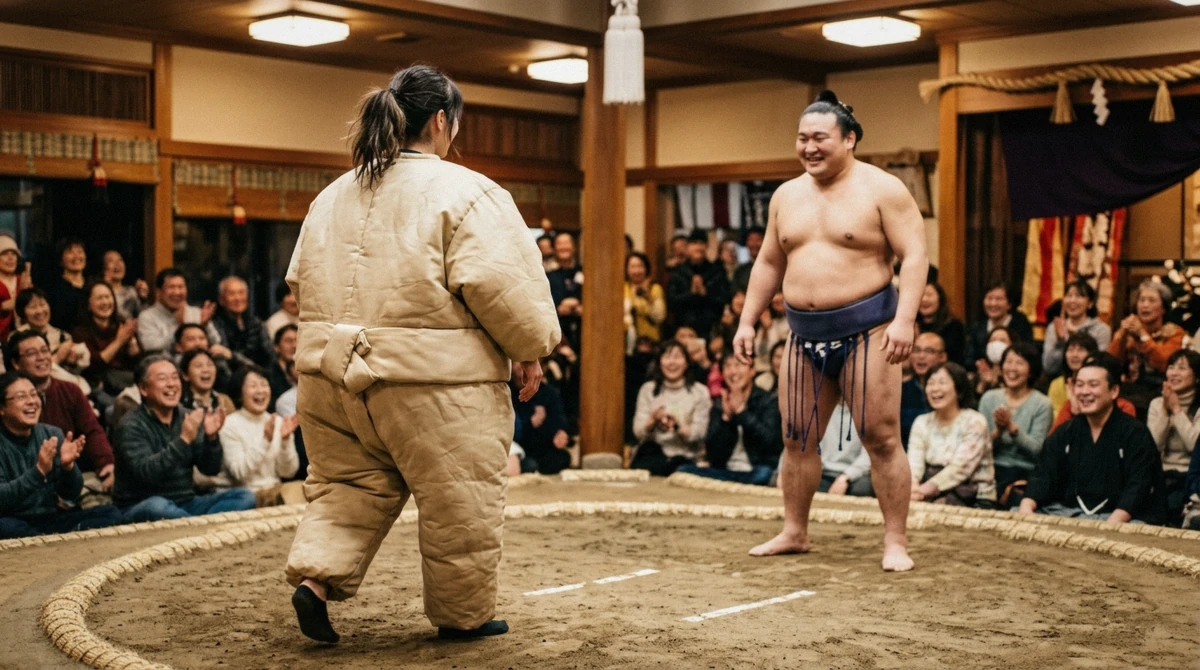
- Staged entertainment performed by retired professional wrestlers
- English-speaking MC narrates rituals, techniques and each bout
- Interactive: guests can be chosen for a ring challenge
- Photo session with the wrestlers included at most shows
- 1 to 1.5 hours, multiple show times daily, easy to fit around a trip
Stable morning practice ($113)
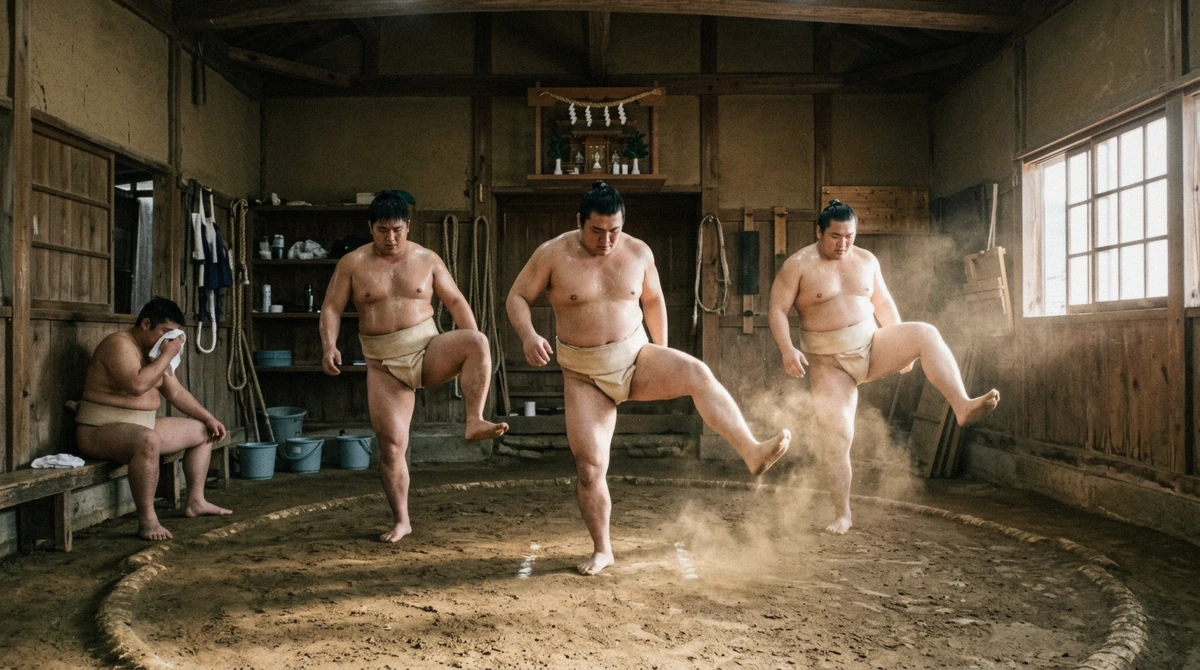
- Real asageiko training by active professional wrestlers, not a performance
- No MC, no narration, no lighting rig, just the stable's own morning routine
- Silent observation only, no ring challenge or participation
- Small group, seated meters from the ring, close enough to hear the impact
- 2 hours, early morning only, availability tied to the stable's real schedule
Verdict Neither is a lesser version of the other, they answer different questions. A show answers 'what does sumo look like and how does it work,' explained for a visitor who's never seen it. Morning practice answers 'what does it actually take to train as a wrestler,' with nothing softened or explained for an audience. If you only have time or budget for one, choose based on which question you actually want answered, not on which one sounds more authentic on paper.
Three Ways to See Sumo in Osaka
A third option exists for a narrow window each year. Here's how all three stack up.
| Option | Price | What it is | Availability |
|---|---|---|---|
| Tourist show | $60-91 | Staged entertainment, English MC, ring challenge | Year-round, multiple times daily |
| Stable morning practice | $113 | Real asageiko training, silent observation | Year-round, early morning slots, small group |
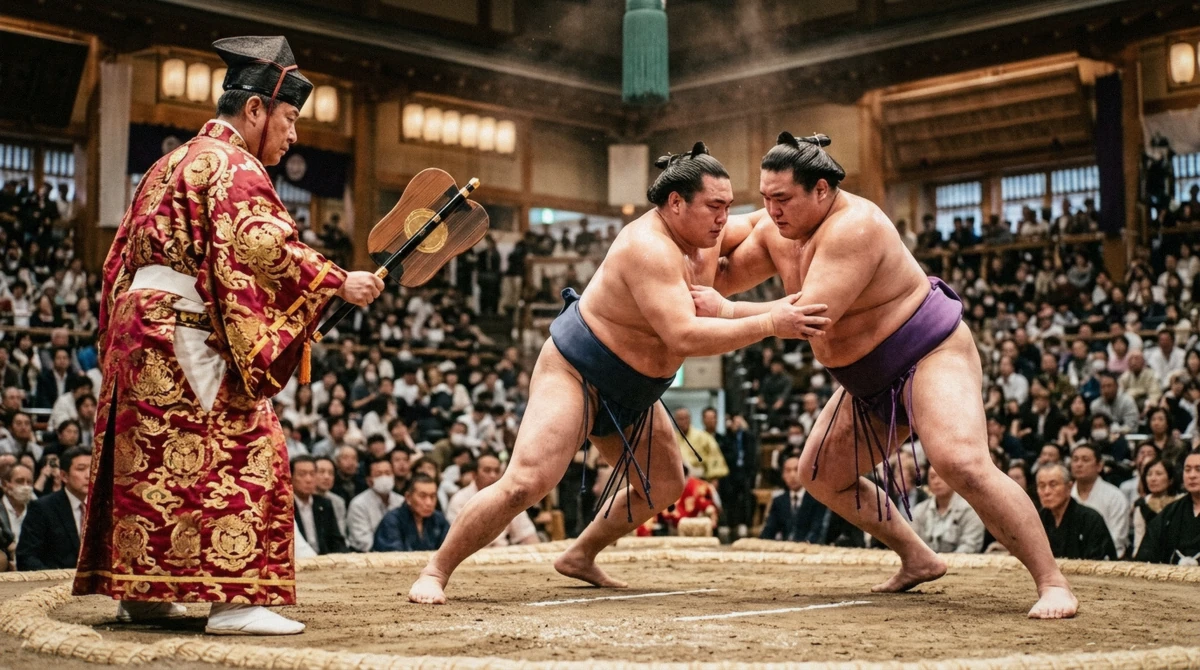
| Grand Sumo Tournament | Ticketed separately | The only competitive, official sumo in Osaka | About 15 days each March only |
The tournament isn't a booking through this site's tours, it runs on its own official ticketing calendar and only exists in Osaka for roughly two weeks each March. If your dates happen to overlap, our March tournament guide covers dates, ticket tiers and how to book, and we won't repeat those details here. Outside of March, the choice genuinely comes down to show versus practice.
What Morning Practice (Asageiko) Actually Looks Like
Asageiko is the wrestlers' own daily training, run early in the morning before the stable's public day begins, and it looks nothing like a show. There's no MC, no seating chart built for an audience, no explanation offered as it happens. You sit on the floor, a small group, meters from a working dohyo, close enough to hear breathing and the genuine impact of bodies colliding.
It runs about 2 hours, and the format is deliberately unpolished, because it isn't built for visitors in the first place, you're watching something that would happen with or without you there. For the full walkthrough of what a morning at the stable actually involves, from arrival to the free photos afterward, see our dedicated morning practice guide, or book the stable practice tour directly.
Group Size and Atmosphere
The room itself feels completely different between the two, and it's worth picturing before you book. A show seats a full audience, the energy builds through the rituals and peaks at the ring challenge, and the room is designed to react together, applause, laughter at the MC's jokes, a shared gasp at a big throw. It's a social experience even if you came alone.
The stable morning practice is capped to a small group by design, and the room stays quiet by convention rather than by rule, nobody has to tell you to lower your voice because the silence itself makes it obvious. You'll likely be close enough to other wrestlers waiting their turn to see their expressions between drills, something a show's staging never puts you near. If a big, shared-energy room sounds appealing, book a show; if you'd rather feel like you slipped into somewhere you technically weren't supposed to be, that's the practice tour.
Who Should Book What
If you're traveling with kids or it's your first time seeing sumo
book a show, the narration and ring challenge make it easy to follow
If you want to understand sumo as a sport before watching a real bout
book a show first, it's the better introduction
If you've already seen a show, or sumo is a genuine interest rather than a curiosity
book the stable morning practice
If you want the closest thing to real, competitive sumo
book the practice tour, or the tournament if your dates fall in March
If you're deciding between the two with limited time
pick based on the question you want answered, see the verdict above
Price and Logistics, Side by Side
Beyond the headline price, a few practical differences are worth knowing before you book.
| Tourist show | Stable morning practice | |
|---|---|---|
| Price | $60-91 per person | $113 per person |
| Group size | Larger audience seating | Small group, capped low |
| Time of day | Multiple show times daily | Early morning only |
| Duration | 1 to 1.5 hours | 2 hours |
| Participation | Ring challenge possible | Observation only |
| Photos | Included, staged session | Free, informal, after practice |
What the Price Gap Buys
The price gap reflects access more than length, you're paying more per hour for the practice tour, but what you're paying for is a small group seated inside a working stable rather than a produced show built to accommodate a full room. Both include photos with the wrestlers, though the tone differs, one is a posed session at the end of a performance, the other is an informal moment after the stable's real training wraps up. Booking flexibility differs too: shows run on a published daily schedule with several time slots to choose from, so a same-week booking is rarely a problem.
The stable's morning practice sits inside the wrestlers' real training calendar rather than a schedule built around tourist demand, so it pays to book that one earlier in your trip planning rather than leaving it for a last-minute morning.
How to Decide on Budget
Neither option requires choosing based on price alone. A traveler on a tighter budget who wants the more memorable experience for their trip is often better served picking the $60 show over stretching for the $113 practice tour just because the number is higher, the show's ring challenge and photo session tend to be what people talk about afterward, not the price paid. Conversely, someone who's already seen a show on a previous trip and specifically wants the training-floor version has a clear reason to spend the extra amount.
Couples celebrating an occasion sometimes ask which feels more special, and honestly, that depends on temperament rather than price: a show's shared-room energy suits people who enjoy being part of an audience, while the practice tour's quiet intimacy suits people who'd rather feel like they found something rather than attended something.
There's no wrong choice here, only a mismatched one. A show that oversells itself as 'the real thing' would be dishonest, and a practice tour marketed as more exciting than a show would be too, they're built for different visitors. Know which question you want answered, and book accordingly.
If you're still deciding, our first-time guide walks through exactly what a show involves minute by minute, which is often enough to settle it; if you already know a show is right for your trip, the live show with the audience challenge is the most-booked option on this site. Whichever you land on, both are honest representations of what they claim to be, and neither leaves a visitor feeling like they paid for less than they got.
What is asageiko?
Asageiko is the wrestlers' own daily morning training, run at a working stable before the public day begins. It's the real training routine, not a performance, and it's what the stable morning practice tour lets small groups sit in on.
Why is the sumo morning practice tour worth booking?
If you want to see real professional wrestlers training with nothing staged for an audience, it's the closest thing to authentic sumo most visitors will get outside of March. If you're new to sumo and want it explained as you watch, a show suits a first visit better.
How much does a sumo stable visit cost in Osaka?
The stable morning practice tour runs $113 per person for a 2 hour visit, a small group seated meters from the ring watching real asageiko training.
How do tourists watch real sumo training in Osaka?
Through a small-group stable morning practice tour. It's silent observation only, no ring challenge or participation, but it puts you inside a genuine training session rather than a performance built for visitors.
How well do a show and morning practice pair on the same trip?
Very well, and it's a good pairing. A show explains the sport first; morning practice afterward is far more legible once you already recognize the rituals and techniques from having seen them narrated.
Which is better for someone who's never seen sumo before?
A show. The English MC explains every ritual and technique as it happens, which morning practice deliberately doesn't offer since nothing there is narrated for an audience. Save the practice tour for a repeat visit or a trip where you already know what you're watching.
How far in advance should I book the morning practice tour versus a show?
Book the stable morning practice earlier, since it sits inside the wrestlers' real training calendar and runs a small group with early-morning slots. Shows run multiple times daily on a published schedule, so a show can usually be booked closer to your visit.