Sumo Rules Explained: How a Match Is Won (and Lost)
The sumo wrestling rules sound complicated from the outside, but the actual contest is simpler than most sports: a bout usually lasts seconds, decided by one of two conditions, with no weight classes and no rounds. This guide breaks down exactly how a win happens, what counts as a foul, the 82 recognized winning techniques and the handful you will actually see most often, who is officiating from ringside, how the ranking ladder works, and the meaning behind the rituals before every bout. At the end, we cover how these same rules look different at an Osaka tourist show versus the real March tournament.
Quick answer
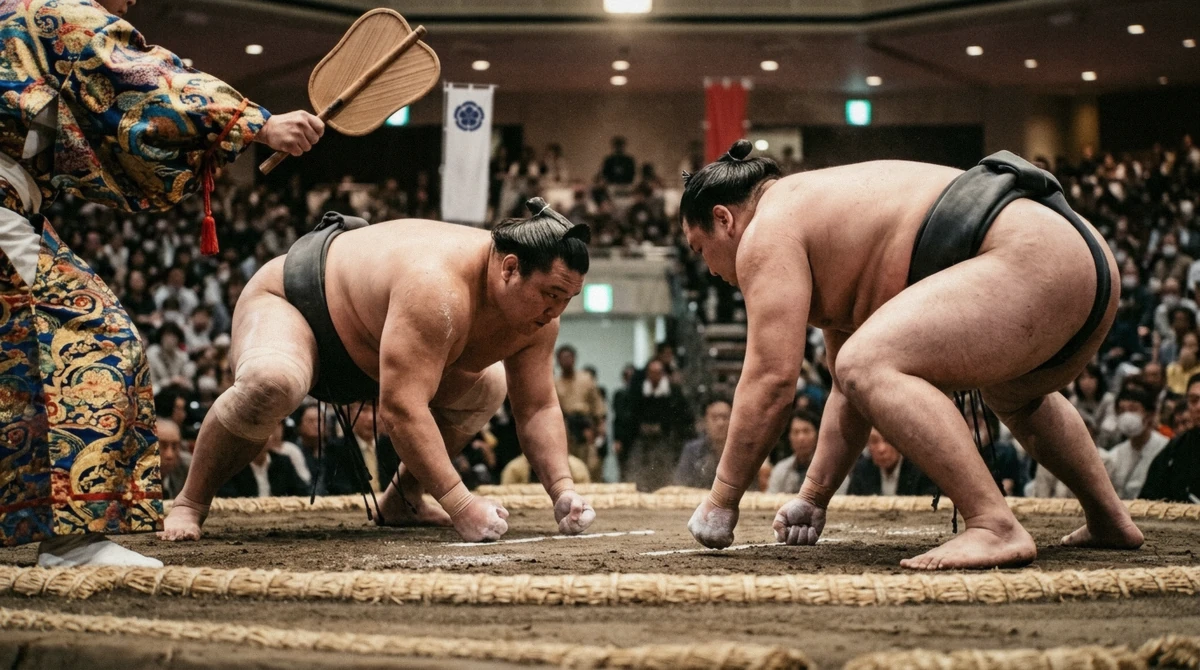
A sumo bout is won one of two ways: force your opponent out of the 4.55-meter dohyo circle, or make any part of their body other than the soles of their feet touch the ground. Certain moves, closed-fist punches, hair pulling, choking, are illegal, and 82 officially recognized techniques (kimarite) can end a bout. You can see these rules demonstrated live at an Osaka sumo show from $60, narrated in English by retired professionals.
Key takeaways
- Win condition: force the opponent out of the ring, or make any body part but the soles touch the ground
- The dohyo, the ring itself, is 4.55 meters across, and stepping outside it ends the bout instantly
- 82 kimarite (winning techniques) are officially recognized, though a handful, like yorikiri and oshidashi, decide most bouts
- Illegal moves include closed-fist punches, hair pulling, and eye or throat attacks
- Ranks run from maegashira up to yokozuna, and winning 8 or more of 15 bouts (kachi-koshi) moves a wrestler up
- Want to watch these rules explained live? Osaka's sumo shows narrate every ritual and technique in English
How a Bout Is Won
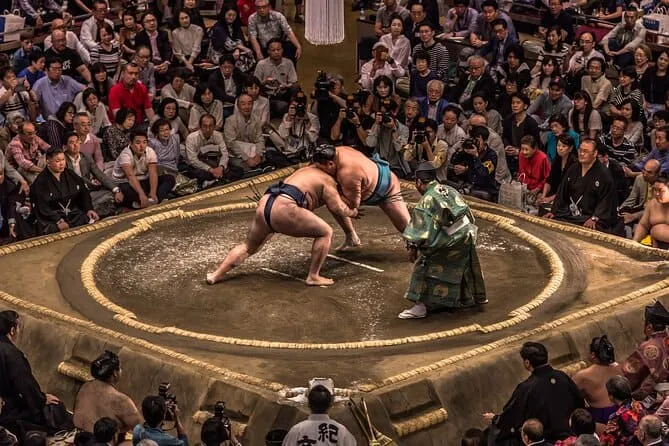
Every sumo bout is decided one of two ways, and nothing else counts. The first: force your opponent out of the dohyo, the circular ring, which measures 4.55 meters across. Step outside that circle with any part of your body and the bout ends immediately, win or loss decided on the spot.
The second: make any part of your opponent's body other than the soles of their feet touch the ground inside the ring, whether that is a knee, a hand, or a full fall.
There are no rounds, no points system, and no judged decision under normal circumstances, a bout is either still going or it is over. Most matches last only a few seconds from the initial charge to the finish, which is part of why the atmosphere at both a tourist show and a real tournament builds so quickly, the entire outcome can turn on a single push.
Why It Looks Faster Than It Is
That simplicity is deceptive, though. Because a bout can end the instant a heel touches sand outside the circle, or the instant a knee brushes the clay inside it, wrestlers spend the pre-bout charge fighting for balance and position more than for any single dramatic throw. A wrestler who looks like they are winning a shoving match can lose in a fraction of a second to a well-timed sidestep that sends their own momentum carrying them out of the ring, which is why experienced viewers watch the feet and the hips as closely as the hands.
Illegal Moves
Sumo allows an enormous range of throws, trips and pushes, but a specific set of moves is banned outright regardless of how effective they might be.
- Punching with a closed fist
- Pulling hair
- Eye gouging or attacking the solar plexus
- Choking
- Kicking the chest or waist
- Grabbing the vertical front strip of the mawashi (the belt)
These rules exist to keep sumo a contest of balance, leverage and technique rather than a striking sport, which is also why the legal technique list is so much longer than the illegal one, almost everything that is not on the banned list above is fair game if a wrestler can pull it off.
Kimarite: The 82 Winning Techniques
Sumo officially recognizes 82 kimarite, the named techniques that can end a bout. Most casual viewers only ever need to recognize a handful, since a small group of common techniques accounts for the majority of finishes at any given tournament or show.
| Kimarite | What it is |
|---|---|
| Yorikiri | Force-out: driving the opponent straight back and out of the ring by the belt or body |
| Oshidashi | Push-out: pushing the opponent out without a belt grip, hands to the chest or shoulders |
| Uwatenage | Overarm throw: gripping the opponent's belt over their arm and throwing them down |
Beyond these three, the remaining kimarite cover everything from ankle sweeps to backward pulls to slap-downs, and part of what makes sumo rewarding to watch closely is learning to spot which of the 82 just decided a bout you saw happen in under five seconds. A tourist show's English MC will usually name the technique right after each demonstration bout, which is a fast, low-pressure way to start recognizing them before watching an unnarrated real match.
None of the 82 require any equipment beyond the wrestler's own body and the opponent's mawashi, the belt, which is part of why sumo techniques translate so directly from the training floor to the ring, there is no stick, no glove, no weight-class-specific gear to account for. A wrestler's size and reach shape which techniques they favor, a larger wrestler leaning on force-outs like yorikiri, a smaller or quicker one leaning on throws and trips that use the opponent's own momentum, but the full list of 82 is available to every wrestler regardless of build.
Who Is Officiating
Every bout is overseen by a gyoji, the referee, recognizable by silk robes and the gunbai, a war fan used to point toward the winner the instant a bout ends. But the gyoji is not the only authority in the room. Five ringside judges, the shimpan, sit around the dohyo and can challenge the gyoji's call.
When a decision is close enough to dispute, the shimpan hold a mono-ii, a brief conference at ringside to review the finish and confirm or overturn the gyoji's ruling before the next bout begins.
The Ranking Ladder (Banzuke)
Every wrestler's rank is published on the banzuke, the ranking list, and it moves up or down after every tournament based on results, not on a fixed schedule.
| Rank | Position |
|---|---|
| Yokozuna | Grand champion, the highest rank, held for life once earned |
| Ozeki | Champion, second-highest rank |
| Sekiwake | Third-highest rank in the top division |
| Komusubi | Fourth-highest rank in the top division |
| Maegashira | The bulk of the top division (makuuchi), numbered by rank within the tier |
| Juryo | The second division, just below makuuchi |
A tournament runs 15 bouts per wrestler in the top divisions, and a record of 8 wins or more, called kachi-koshi, moves a wrestler up the banzuke for the next tournament. Fall below 8 wins and the wrestler moves down instead. Reaching yokozuna, the top rank, requires a sustained run of dominant results at ozeki and is not simply a matter of one strong tournament, which is part of why the rank is held for life once earned and almost never handed out.
The Rituals Explained
The ceremony before a bout is not decoration, each part has a specific meaning rooted in sumo's origins as a Shinto ritual as much as a sport.
- Salt throw: tossed into the ring before a bout as a purification, a practice with Shinto roots
- Shiko: the wide, stomping leg raises wrestlers perform, meant to drive evil spirits from the ring
- Chiri-chozu: a hand-clapping and rinsing gesture, showing the hands are empty of weapons
- Tachiai: the initial charge at the start of a bout, when both wrestlers launch off the line at the same instant
These same four rituals appear at every level, a tourist show, a stable's morning practice, and a real tournament, which is part of why recognizing them ahead of time makes any format easier to follow. Once you know what the salt throw and the shiko stomps mean, the pre-bout ceremony stops looking like a delay and starts looking like the buildup it actually is.
How These Rules Look at an Osaka Show vs the Tournament
Every rule above applies identically at a tourist show and at a real tournament bout, the dohyo is the same size, the win conditions are the same, and the same illegal moves are banned. What changes is who is demonstrating them and how the outcome is decided.
At Osaka's tourist sumo shows, retired professional wrestlers demonstrate the same techniques, rituals and win conditions covered above, with an English-speaking MC explaining each one as it happens, and the results are staged for the audience rather than fought for real. Our worth-it guide covers exactly what that distinction means for a visitor deciding whether to book one. At the March Grand Sumo Tournament, the only real competitive sumo in Osaka, active ranked professionals fight for an outcome nobody has scripted, with an actual gyoji, real shimpan, and a result that genuinely affects the banzuke; see our tournament tickets guide for dates and seating if your trip lines up with it.
Watching a show first, with the rules explained slowly and in English, is a genuinely useful way to prepare for an unnarrated tournament bout later, since by then you already recognize the salt throw, the tachiai, and roughly what a yorikiri or oshidashi looks like when it happens in real time.
The rules themselves are simple once broken down: two ways to win, a short list of fouls, a small handful of techniques that decide most bouts, and a ranking system that gives every result weight beyond the match itself. What changes between a show and a tournament is not the rulebook, it is who is fighting and whether the outcome is real. Either way, knowing the rules before you sit down is what turns a few seconds of contact into something you can actually follow.
If this is your first time planning to watch sumo in Osaka, our first-time guide walks through exactly what to expect at a show once the rituals and rules above are already familiar.
What are the rules of sumo wrestling?
A wrestler wins by forcing the opponent out of the 4.55-meter dohyo, or by making any part of the opponent's body other than the soles touch the ground. A set of moves, including closed-fist punches, hair pulling and choking, is illegal.
How do you win a sumo match?
Either force your opponent out of the ring, or make any part of their body other than the soles of their feet touch the ground. One of 82 recognized kimarite is credited for each finish.
What moves are illegal in sumo?
Closed-fist punches, hair pulling, eye or solar-plexus attacks, choking, kicking the chest or waist, and grabbing the vertical front strip of the belt.
What do the sumo ranks mean?
The banzuke ranking ladder runs from maegashira up through komusubi, sekiwake and ozeki to yokozuna, the grand champion rank held for life once earned. A tournament record of 8 or more wins (kachi-koshi) moves a wrestler up for the next tournament.
Why do sumo wrestlers throw salt?
Salt is thrown into the ring before each bout as a purification ritual, part of sumo's Shinto roots.
How long does a sumo match last?
Usually just seconds. Most bouts are decided quickly once the tachiai, the initial charge, connects.
Who decides a close call in sumo?
The gyoji makes the initial call, but five ringside shimpan can dispute it. If the call is close, they hold a mono-ii, a brief conference, to confirm or overturn the result.